Solve Stack
How to Get a Job vs. AI
How to Get a Job vs. AI
Couldn't load pickup availability
Can You Get a Job in the AI Era?
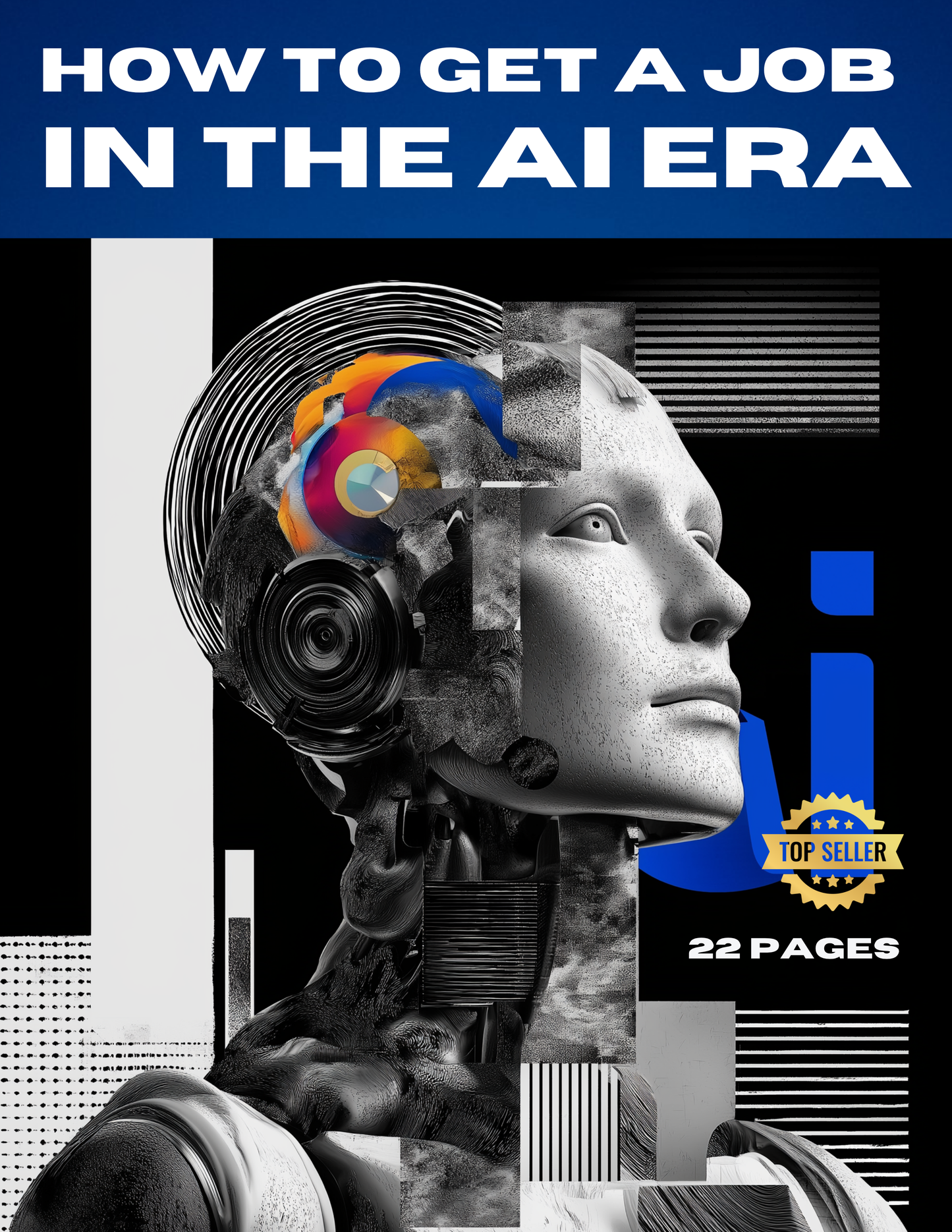
(22 pages) Artificial intelligence is not coming for the future of work — it is already reshaping it. Across industries, from healthcare and education to finance, media, law, logistics, and government, AI is changing how work gets done, who gets hired, and which skills matter most. For new graduates entering the workforce in 2026, the challenge is not simply competing against automation, but learning how to work alongside it.
The graduates most likely to succeed in the AI era will not necessarily be the most technical. They will be the most adaptable. Employers are increasingly looking for people who can think critically, communicate clearly, solve complex problems, and use AI tools effectively without becoming dependent on them. The ability to ask good questions, verify information, interpret data, and make ethical decisions may become more valuable than memorizing routine tasks that software can now perform in seconds.
Many entry-level jobs are changing rapidly. Tasks once assigned to interns or junior employees — drafting reports, summarizing meetings, basic coding, customer support, research, and content creation — can now be assisted by AI systems. But that does not mean opportunity is disappearing. It means expectations are rising. Companies increasingly want graduates who can manage AI outputs, improve workflows, and bring creativity, judgment, emotional intelligence, and leadership that machines cannot replicate.
New graduates should also understand that lifelong learning is becoming essential. The traditional idea of earning one degree and relying on it for a 40-year career is fading. The modern workforce rewards people who continuously learn new technologies, adapt to industry shifts, and build flexible skill sets. Certifications, digital literacy, personal branding, and practical experience may matter as much as formal credentials.
At the same time, AI is creating entirely new industries and careers. Roles in AI ethics, cybersecurity, prompt engineering, machine learning operations, digital communications, data governance, and human-centered design are expanding quickly. Entrepreneurship is also becoming more accessible, as AI tools allow individuals and small teams to perform work that once required large organizations.
The future of work will belong to people who understand that technology is a tool, not an identity. Degrees still matter. Human relationships still matter. Character still matters. In a world increasingly shaped by algorithms, the graduates who stand out may be the ones who remain deeply, intelligently human.
Share